Build a professional filmmaking skill without disrupting your weekdays. Learn to shoot, produce, and edit professional videos for individuals, brands, and companies through practical Saturday classes in Lagos.
Have you ever thought about the process behind that blockbuster movie that you can't stop talking about?
Do you have a flair for Scriptwriting, or core video production? Do you want to create a career path in the media industry?
Welcome to Praxis Digital Academy.
With a mapped-out course outline, practical lessons and real production projects, we bring you an intensive 15-Saturday Training in Filmmaking & Content Creation designed around your weekday commitments.
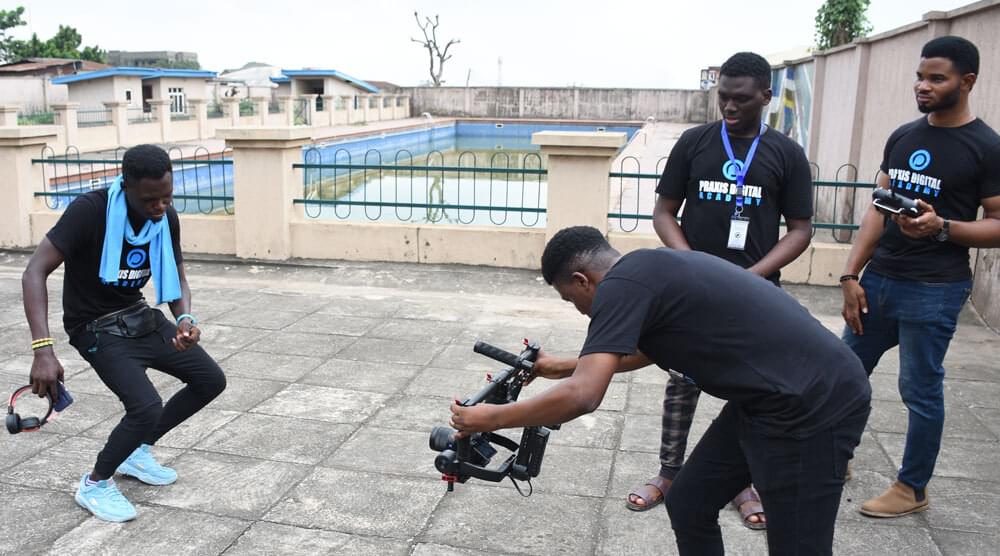
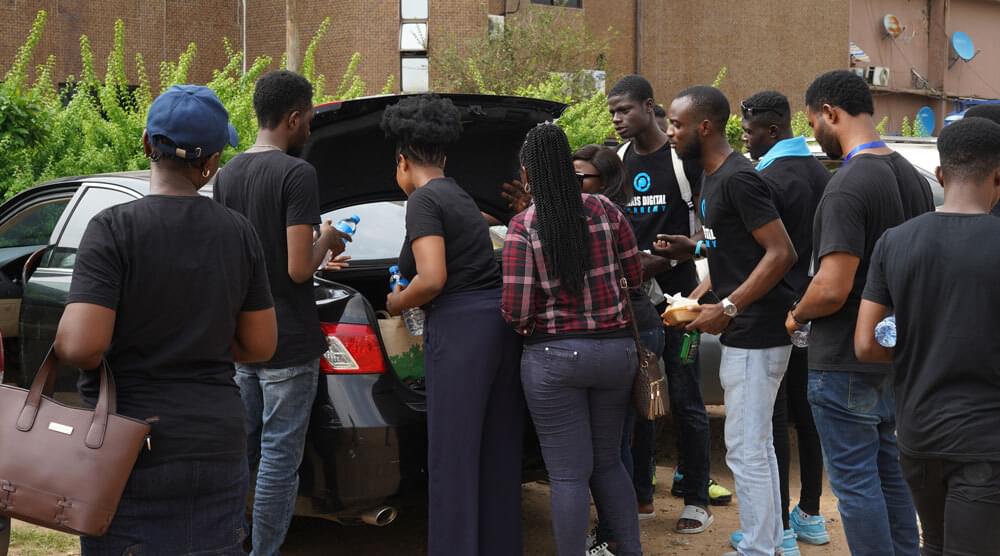
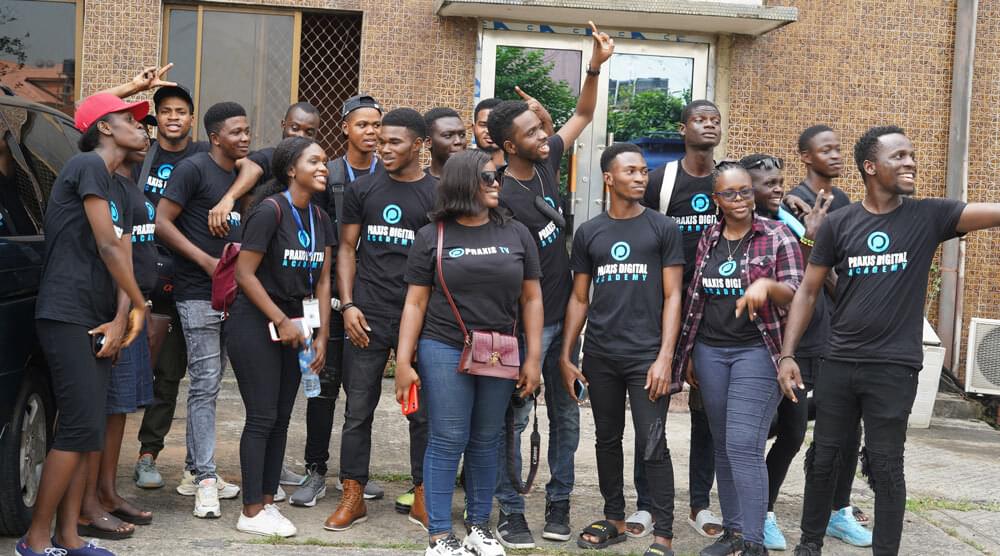
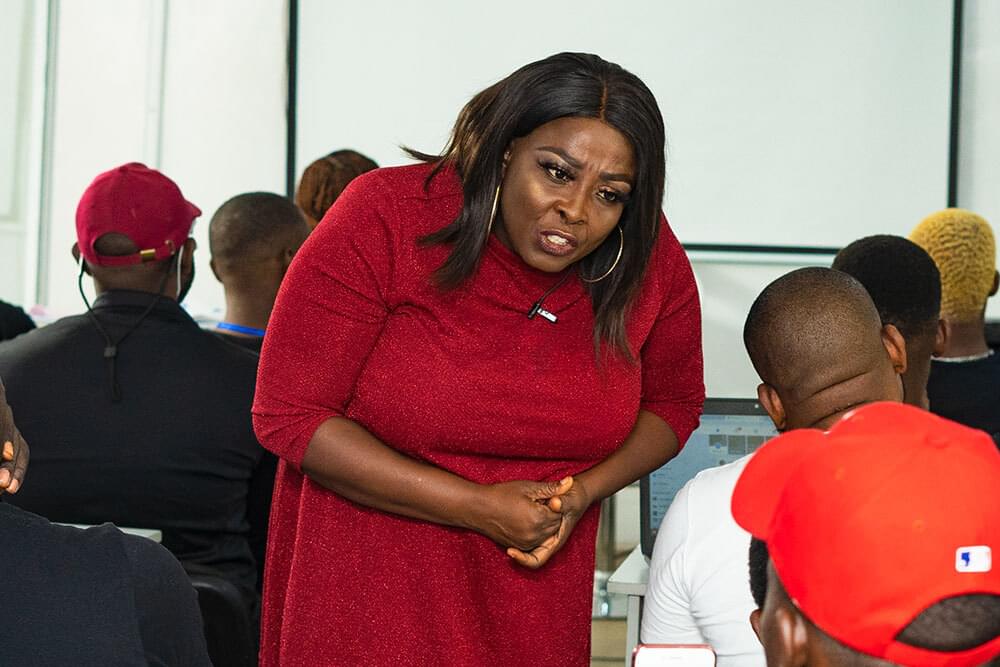
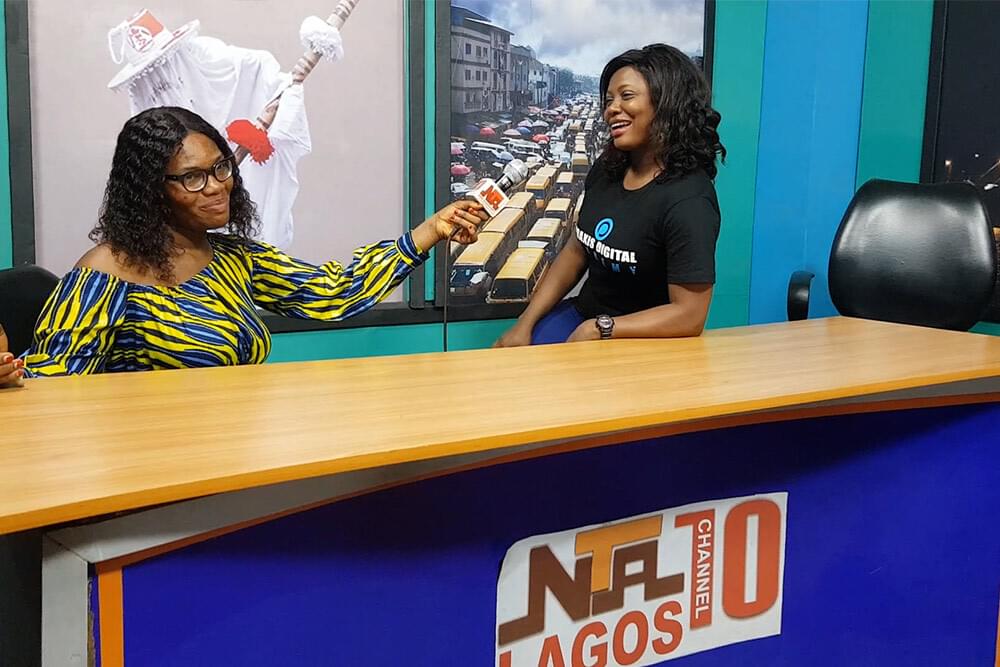
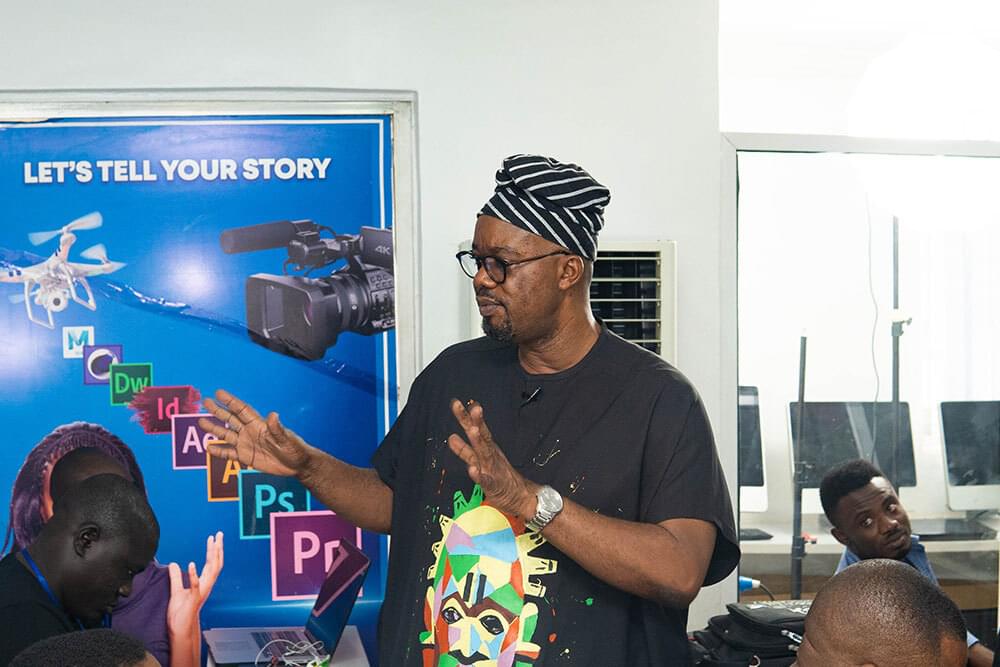
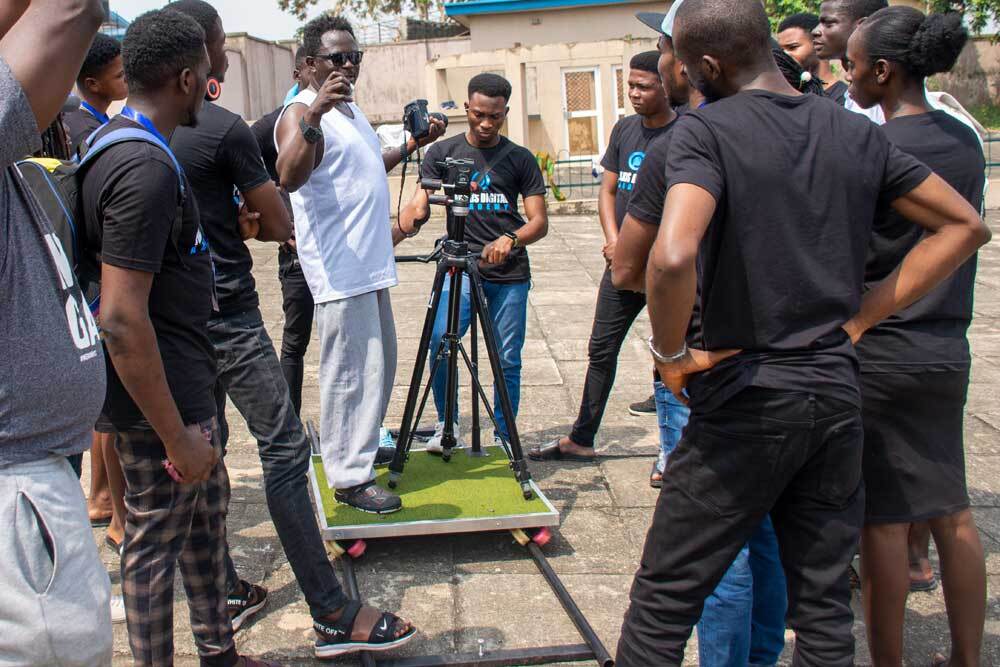
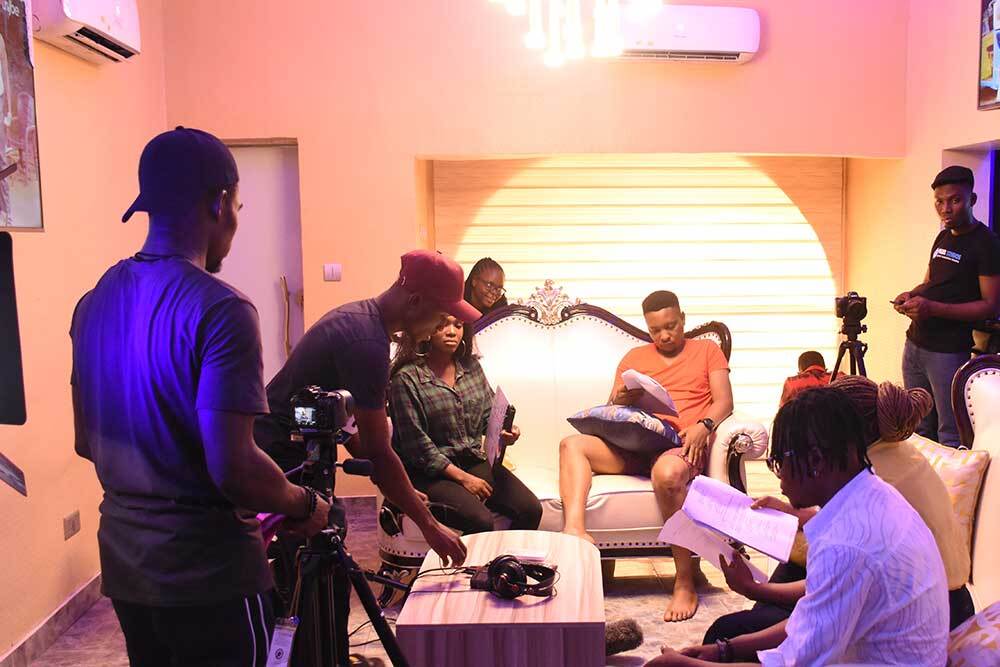
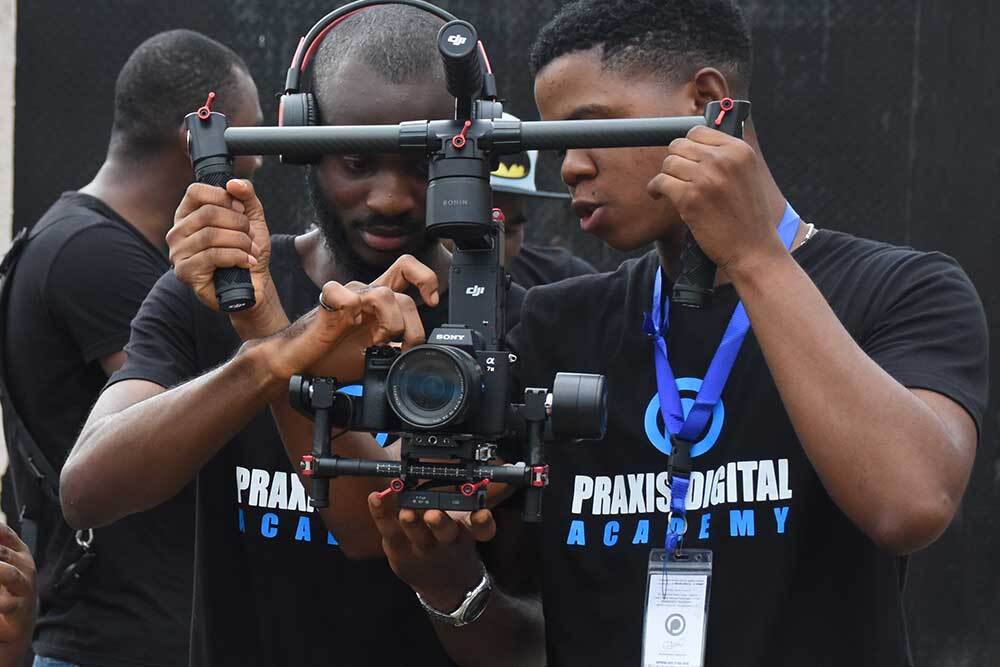
Real students. Real equipment. Real film sets. This is what your training looks like.
Actual photos from previous training cohorts
We don't just teach filmmaking. We help you build the practical confidence, portfolio, and career tools to work like an industry-ready professional.
No theory overload. From day one, you'll handle professional cameras, fly drones, and edit real footage. Every class is a working film set.
Train with Sony, Canon & Black Magic cameras, DJI drones, professional lighting kits, and gimbals. The same gear used in Nollywood productions.
Leave with 3 completed projects: a short film, music video, and TV commercial. Not certificates - actual work samples to show clients.
Get exposure to real media environments, broadcast workflows, and experienced industry voices through guided visits and practical learning moments.
Learn 7 ways to monetize your skills. Get contracts, invoices, and proposal templates. We teach you how to get paid, not just how to shoot.
Receive a professional certificate from Praxis Digital Academy. Join our alumni network.
Every Saturday builds on the last. You progress from camera mastery and storytelling to full production, post-production, a showreel, a business plan and certification.
Camera & Equipment
Module 01
Most people pick up a camera and guess. Across the first two Saturdays, you will learn exactly why every shot looks the way it does and how to control it deliberately.
How Nollywood, TV, corporate, and digital content markets work and where the real money is in 2026.
Sony A7, Canon EOS, Blackmagic Pocket Cinema. You will hold each one, understand the differences, and know which to recommend to a client.
Rule of thirds, leading lines, headroom, negative space. Wide, medium, close-up. The visual grammar that makes scenes feel intentional.
Focal length, aperture, shutter speed, ISO, depth of field. You will understand what every dial does and why, not just memorise settings.
6K vs 4K vs 1080p. 24fps cinematic feel vs 60fps slow motion vs 120fps ultra-slow. Know what to choose for every job type.
What to buy first with a small budget, where to source gear in Lagos, and how to avoid wasting money on the wrong equipment.
By the end of Saturday 2 you will have shot your first properly exposed, well-composed cinematic sequence using professional camera settings. Not a test reel. Actual footage you can show people.
Story & Script
Module 02
A great camera operator shoots what is in front of them. A great filmmaker controls what is in front of them. That starts with the script. This Saturday you learn to build stories from scratch.
Why certain stories get watched and shared. How emotion drives decision making, and how the best Nigerian commercials and films exploit this.
Industry-standard format, three-act structure, subtext in dialogue, and action line economy. Write clean, shootable scripts from day one.
Scene headings, action lines, dialogue, transitions, and parentheticals. Learn the formatting rules that make your script easy for actors, directors, and crew members to follow on set.
Circumstance, Curiosity, Characters, Conversations, Conflicts. The five elements every compelling story must have, from a 30-second ad to a feature film.
Work with Final Draft, Celtx, and accessible alternatives. Set up properly formatted scripts, revise scenes quickly, and export clean production-ready documents.
Writing a feature vs a 30-second TV spot vs a 15-second Instagram ad are completely different skills. You will learn all three.
You will write a complete 5-page short film script with proper industry formatting, compelling characters, and a production-ready structure. This script goes into production on Saturday 11.
Cinematic Lighting
Module 03
Light is the difference between footage that looks like a home video and footage that looks like it costs millions. This Saturday you stop guessing and start controlling it deliberately.
Key light, fill light, backlight, hard vs soft light, contrast ratios. The vocabulary every cinematographer speaks fluently.
LED panels, tungsten fixtures, HMIs, fresnels, and practical lights. Understand what each unit is best suited for and how to choose the right tool for each scene.
Use the Kelvin scale, white balance controls, and correction gels to manage daylight, tungsten, and mixed-light scenes without unwanted colour casts.
Build a complete key, fill, and backlight setup. Learn how to shape faces, separate subjects from the background, and adjust contrast for interviews and dramatic scenes.
Indoor setups, controlling harsh Nigerian sunlight outdoors, managing mixed ambient in real Lagos environments. Practical skills for real shoots.
Control and shape light using gels, diffusers, reflectors, flags, cutters, and cookies. Turn a basic lighting unit into the precise look your scene requires.
You will fully light and shoot a broadcast-quality interview scene using 3-point lighting. The kind of footage you can deliver to a corporate client without apology.
Audio for Film
Module 04
Viewers will forgive average visuals. They will not forgive bad audio. This Saturday you learn to capture, clean, and mix professional sound even in noisy Lagos locations.
Understand frequency, amplitude, decibels, sample rate, and bit depth so you can monitor recordings correctly and diagnose common audio problems before they ruin a take.
How to position a boom, avoid wind and handling noise, stay out of frame, and get clean dialogue even in chaotic Lagos outdoor locations.
Hide lapel microphones cleanly, manage frequencies, reduce clothing noise, and avoid interference when recording interviews, dialogue, and event coverage.
Operate Zoom and Tascam recorders, set safe input levels, monitor several microphones, and sync externally recorded audio with camera footage during editing.
Noise reduction, de-hum, EQ, compression, and mastering to broadcast loudness standards. Turn messy location audio into professional sound.
Find legitimate music sources, understand common licence terms, and select tracks that will not trigger copyright claims when client work is published online.
Record, capture, and post-produce broadcast-quality dialogue and ambient sound. Audio so clean you could deliver it to any TV station or streaming platform right now.
Gimbal & Stabilization
Module 05
Static shots look amateur. Shaky shots look worse. This Saturday you master the stabilisation equipment that separates a professional reel from a phone video.
DJI Ronin and Zhiyun Crane systems. How to balance, calibrate, and operate for buttery-smooth tracking shots, reveals, and follow shots.
Set up manual and motorised sliders for smooth linear movement. Use subtle push-ins, pull-outs, and side-to-side reveals to add polish to product shots and interviews.
Plan and execute vertical rises, sweeping reveals, and establishing shots. Learn safe setup, counterbalancing, and movement control for more cinematic coverage.
Lay straight and curved tracks, position the dolly safely, and coordinate camera movement with performers to create repeatable shots with precise timing.
When handheld is a deliberate creative choice vs when it just looks unprofessional. Learn to use your body as a stabiliser for documentary and run-and-gun shooting.
Execute a full multi-move gimbal sequence combining a tracking shot, reveal, and follow. The exact kind of footage that makes clients call you back for more work.
Drone Piloting
Module 06
Drone shots charge a premium. Clients pay extra for aerial footage. This Saturday you learn to fly DJI systems safely and capture 4K aerial sequences that justify that premium.
Understand when aerial footage improves a story, how to plan useful establishing shots, and where drone cinematography adds real production value instead of becoming a distraction.
Compare DJI Mavic, Air, and Mini systems. Learn the aircraft components, battery checks, controller setup, and pre-flight inspection steps required before take-off.
Use sport, normal, cine, and intelligent flight modes deliberately. Adjust camera and flight settings to balance smooth movement, safety, and image quality.
Practise orbit, reveal, follow, crane-up, and parallax shots. Combine aircraft and gimbal movement to create controlled aerial sequences that cut together smoothly.
Nigerian Civil Aviation Authority rules, no-fly zones in Lagos and Abuja, how to fly legally and professionally, and what happens if you do not.
Capture stable 4K video, RAW photographs, and HDR panoramas. Learn exposure choices and camera movements that produce usable aerial footage for post-production.
Complete a 5-shot cinematic aerial sequence combining orbit, reveal, and crane-up movements. Commercial-grade drone footage you can charge for immediately.
Greenscreen & VFX
Module 07
Nigerian creators who know greenscreen and VFX command higher rates. This Saturday you learn to build scenes that cannot exist in real life, and make them look like they do.
Understand how chroma keying works, when to choose green or blue backgrounds, and how your setup decisions affect the quality of the final composite.
Position subjects at the correct distance from the backdrop, choose suitable flooring and materials, and reduce shadows and spill before filming begins.
Light the backdrop evenly, control green spill, and match the subject lighting to the intended background so the final composite feels believable.
Use Ultra Key, colour key, spill suppression, and edge refinement tools to remove the backdrop cleanly while preserving hair, clothing detail, and natural edges.
How to appear multiple times in the same frame. The technique behind viral Nigerian content and how to offer it as a paid service.
Spill, uneven lighting, wrong distance, green reflections, bad keying, motion blur problems. Every one of these will ruin a shot. You will learn to avoid all of them.
Produce a clean clone-effect composite with professional keying, matched lighting, and colour correction. The kind of VFX shot clients pay a premium for.
Production Planning
Module 08
Talented people lose clients because they cannot manage a production. This Saturday you learn the pre-production systems that make you look like a seasoned pro even on your first paid job.
Understand development, pre-production, production, post-production, and distribution. See how each stage affects your budget, schedule, crew, and final delivery.
Identify the people a video needs to reach and adapt the concept, duration, tone, and format for television, YouTube, Instagram, TikTok, or internal corporate use.
Build realistic budgets for short films and commercials. Account for crew, equipment, locations, logistics, post-production, and contingency before quoting a client.
Choose the right crew roles and create practical gear lists for interviews, music videos, commercials, and short films without overloading the production.
Evaluate locations for sound, light, power, access, safety, and permits. Spot logistical problems early so the shoot day runs smoothly.
Prepare shooting schedules, storyboards, shot lists, and call sheets that keep cast and crew aligned from the first setup to the final wrap.
Build a complete pre-production package for your Saturday 11 short film: script breakdown, budget, shooting schedule, storyboard, call sheet, and location agreement. Everything a client expects to see.
Production Projects
Modules 09-11
This is where everything comes together. Saturday 10 is dedicated to a client-style TV commercial; Saturday 11 is your narrative short-film production. The completed work becomes part of your portfolio.
Produce a 60-second TV-quality commercial from brief to delivery. Voice over recording, greenscreen compositing, client-style production values, broadcast export.
Using the script from Saturday 3 and the pre-production package from Saturday 9, you direct, light, record sound and shoot a complete narrative short film with a cast and crew.
Develop a treatment, design the visuals and shape a finished music-video portfolio piece through the production and editing stages.
3 complete, client-ready productions: a short film, a music video, and a TV commercial. Not drafts. Not tests. Finished work that you can show any client, media house, or employer before you even collect your certificate.
Editing & Post
Module 12
Shooting is only half the job. Saturdays 12, 13 and 14 are dedicated to Premiere Pro, colour, audio, After Effects and advanced editing—finishing your own productions to broadcast standard.
Set up your workspace, organise footage into bins, work efficiently on the timeline, and use shortcuts that make editing faster and more consistent.
Choose the strongest shots, control rhythm, maintain visual continuity, and shape raw footage into a story that holds the viewer's attention.
Synchronise external audio, edit footage from multiple cameras, and create proxies for smooth playback when working with demanding 4K and 6K files.
Clean dialogue, balance sound levels, add music and sound effects, and create an audio mix that supports the emotion and clarity of the final video.
Correct exposure and white balance, match shots consistently, and apply creative colour grades and LUTs that give each production a polished visual identity.
Create titles and simple motion graphics in After Effects, refine chroma keys, and clean up edges so composite shots feel more believable.
Reframe horizontal videos for vertical platforms and edit aerial footage smoothly so the same production can work across multiple channels.
Export correctly for television, YouTube, Instagram, web, and cinema delivery while preserving the quality, aspect ratio, and file size each platform requires.
Edit, colour grade, mix audio, and export all 3 of your productions to broadcast standard. Premiere Pro and After Effects skills at a level that makes clients come back and recommend you.
Business of Videography
Module 13
Skills without a business plan are just a hobby. On the final Saturday, you build the commercial foundation to price, pitch and start earning from your work.
Compare practical low-budget camera options in Nigeria, affordable sound equipment, and starter lighting kits. Build a sensible upgrade plan instead of buying gear you do not need.
Corporate videos, wedding films, real estate aerials, music videos, YouTube content creation, teaching what you know, and equipment rental. Seven practical ways to begin billing clients.
How to build a referral network of event planners, brands, and agencies that keep sending you work. The strategies working Praxis alumni use every day.
Build a presence that attracts clients and brand deals. How to position yourself as the go-to videographer in your niche on Nigerian social platforms.
Present your showreel, package your services, build a credible personal brand, and use simple content marketing to make prospective clients understand what you can deliver.
Present your completed work, receive your Praxis Digital Academy certificate, and celebrate the end of the programme with your cohort and the wider Praxis community.
Walk away with a Praxis Digital Academy professional certificate, a completed showreel, a business launch plan, client proposal templates, and a network of fellow graduates. You are not just trained. You are ready to work.
Practical Saturdays
Comprehensive training
Core Modules
From camera to business
Major Productions
Film, Music Video, Commercial
Professional Certificate
Industry recognized
Everything you need to go from zero to professional across 15 focused Saturdays. Are you ready to stop watching and start making?
From commercials and events to social content, documentaries, music videos, and brand campaigns, video has become one of the clearest ways people communicate, sell, teach, and tell stories.
That is why practical production skill matters. When you can shoot, direct, light, capture sound, fly drones, and edit, you are not just watching the media industry grow. You are building the ability to contribute to it.
You shouldn't miss this training
Air Conditioned
Classroom
Premium
Softwares
Experienced
Teachers
Modern Video
Equipment
On top of 15 Saturdays of intensive hands-on training, every registered student receives three bonus packages that accelerate your workflow, expand your knowledge, and prepare you to charge clients from day one.
Over 15,000 sound effects, licensed music tracks, transitions, motion graphic templates, DaVinci Resolve LUTs, Premiere Pro presets, and plugins. Everything you need to deliver professional post-production from day one after graduation.
Over 100GB of premium cinematography masterclasses from world-class filmmakers covering advanced techniques that go beyond what any classroom can cover. Keep learning long after you graduate.
Client proposal templates, service invoices, production contracts, memorandums of understanding, shot list templates, and call sheet formats. Send your first professional document to a client before you even leave the academy.
Hear from our happy tribe below!
Hear what past students say about the training experience, practical classes, and learning environment.


An evergreen skill like Cinematography will take you places and give you consistent income all year round.
Shoot Corporate Videos and TV Commercials for Companies and Individuals. Earn high income as an Independent Cinematographer.
Shoot Comedy Skits, Shortfilms, Tutorials, and Presentations for Groups, Individual Content Creators, and YouTubers.
Land yourself a high-paying job in a media house, broadcasting station, or other organization.
Teach other people Videography or Video Editing and create additional income streams.
Start up a Media House of your own in the future. Build your own production company.
Produce movies for Local TV and Streaming Platforms and license it for recurring revenue.
The Best Way to Pay Yourself is to Earn a Skill
Take advantage of Digital Platforms to make consistent income for yourself
Let's be direct about the investment. You are not paying for slides and a certificate. You are paying for 15 Saturdays of hands-on access to industry-standard equipment that would cost millions to rent privately. You are paying for 13 modules of practical training that gives you three finished portfolio pieces, plus the network, mentors, bonuses and business framework.
Weekend tuition is N175,000, plus a N24,500 registration fee. A single corporate video job can pay that back. One wedding. One commercial. One real estate aerial. You do the math.
Training starts Saturday, August 8, 2026 and runs for 15 Saturdays. Secure your seat before the cohort fills up.
Weekend Tuition
N175,000
Registration Fee: N24,500
Everything you need to know before securing your slot.
Still have questions?
WhatsApp: 09169198454